
Warning: Please read the instruction manual carefully before use and strictly follow the safety instructions.
To avoid possible electric shock or personal injury:
1. Before use. please check the tester carefully to confirm whether it is damaged. If it is damaged. please stop using it immediately and send it for repair.
2. To check whether the tester is correct. please insert the tester into a known correct socket for testing. and check that the test function is correct before use.
3. The leakage switch test can only be used normally if the wiring is correct.
4. When testing the leakage switch. please turn off the equipment on the power line to ensure that the power outage will not cause any harm. When testing in public places. you must obtain permission before testing.
5. When using a tester to detect incorrect socket wiring. please find a professional electrician to repair the wiring.
6. The testing time cannot exceed 5 minutes.
7. Please be careful not to touch the RCD button when using it to avoid accidentally triggering the leakage protection switch and causing unnecessary losses.
Technical Parameters
Zero fire voltage measurement range: 90~250V/45~65HZ Accuracy: ±(2.0%+2)
Zero-ground voltage measurement range: 1~90V/45~65HZ Accuracy: ±(2.0%+2)
RCD working voltage: 90~250v
Frequency measurement range: 45~65HZ
Working temperature: 0℃~40℃
Working humidity: 20%~75%RH
Storage temperature: -10℃~50℃
Storage humidity: 20%~80%RH
Altitude: ≤2000 meters
RCD current: >30MA
Weight: ≈110g
Size: ≈70*63*55MM
Socket line sequence test
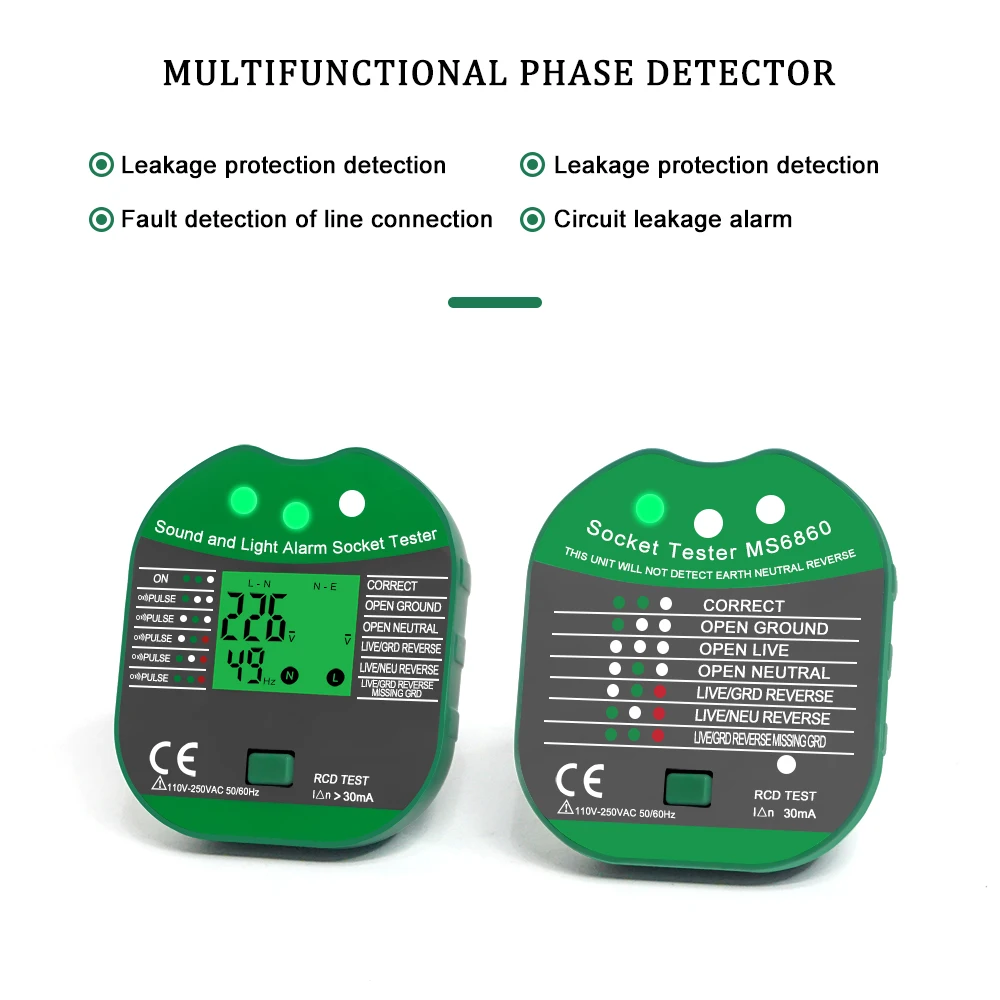
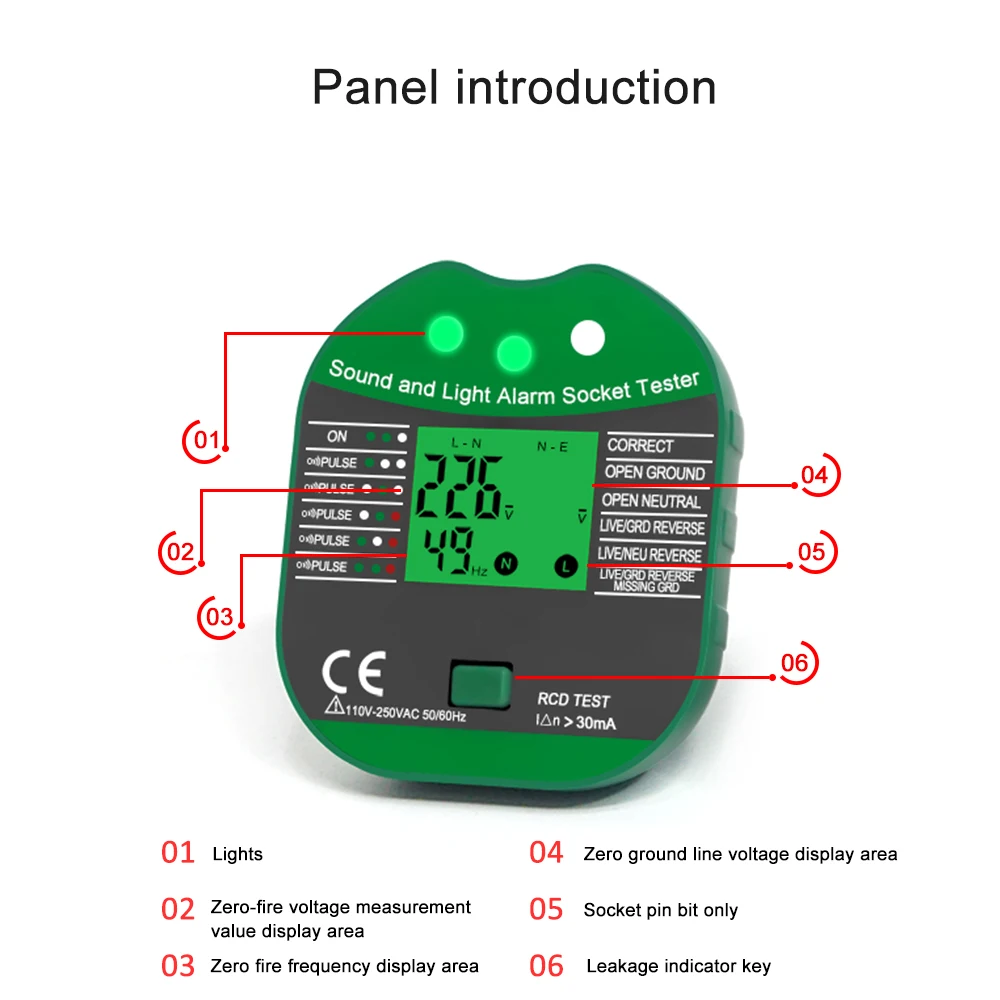
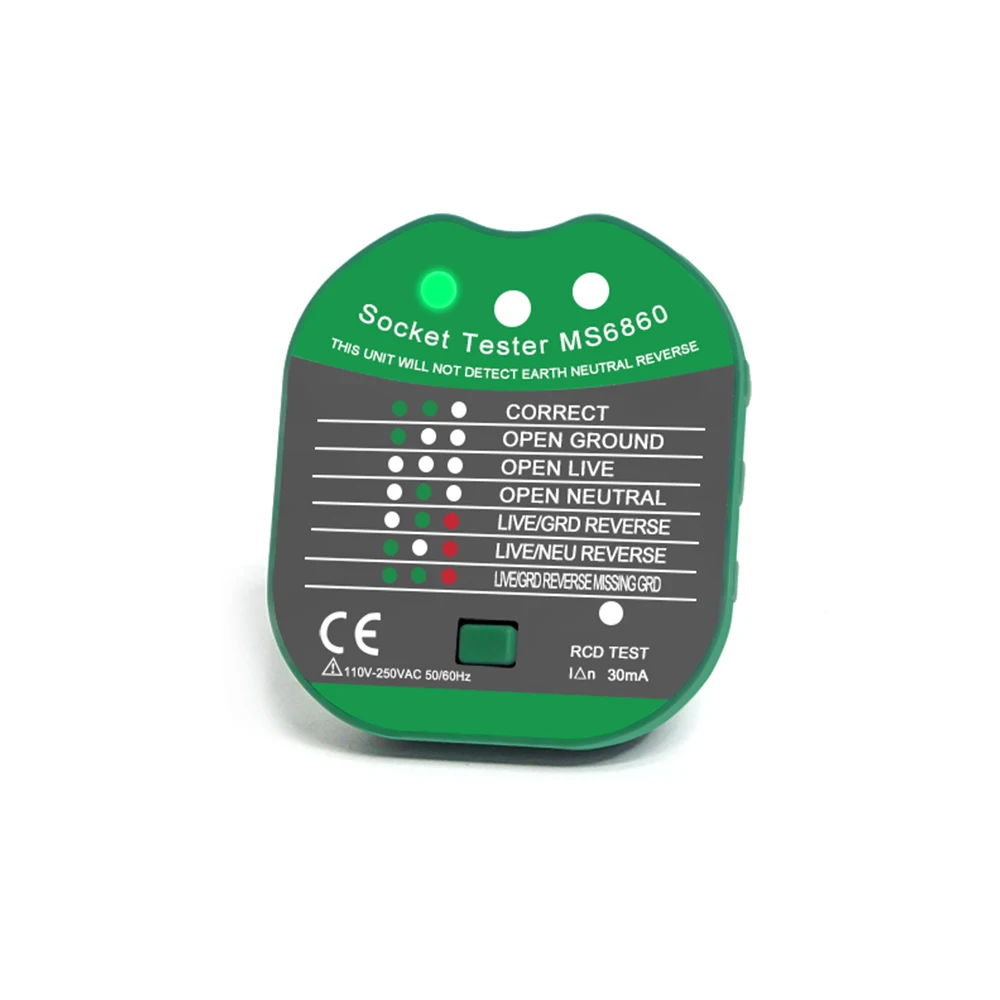
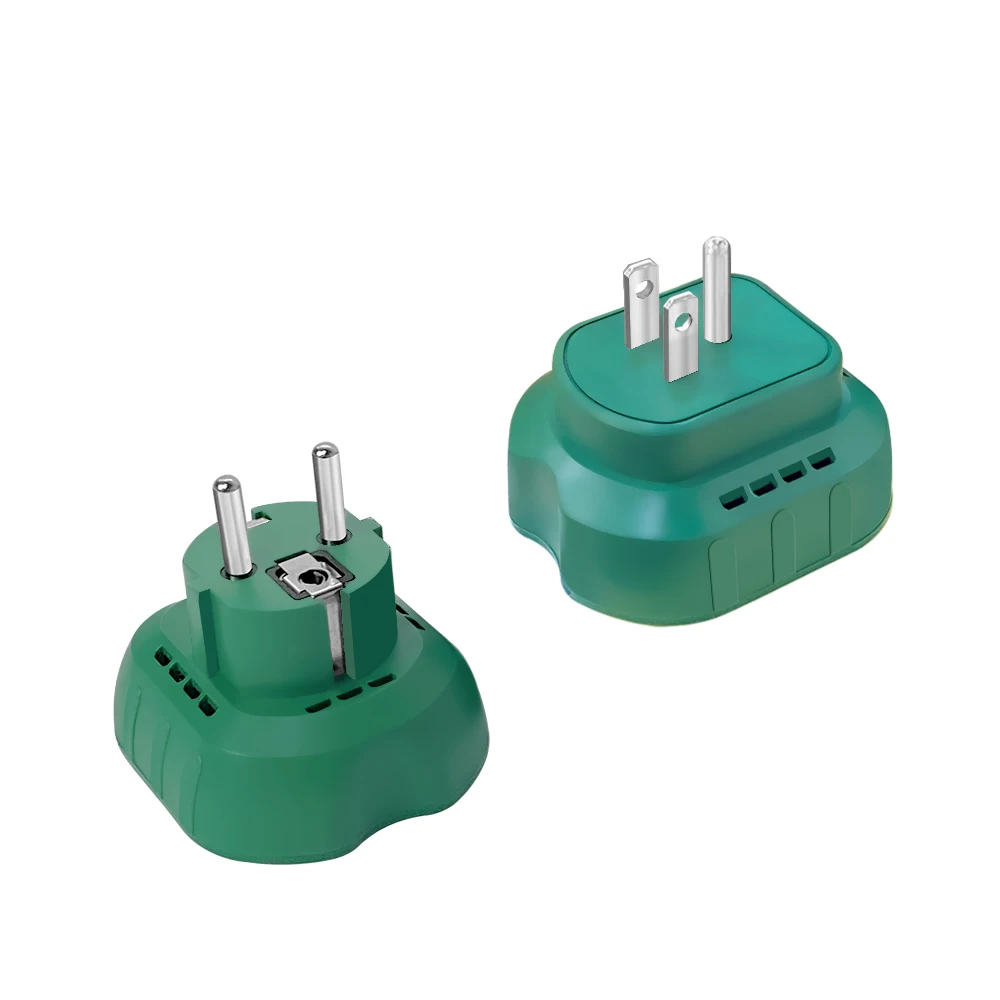
Plug the tester into a standard electrical outlet. When an incorrect socket line sequence is detected. the indicator light will light up to indicate the wiring error. The display will display the corresponding voltage and wiring error prompts. The buzzer will alarm. Then observe the indicator light and function comparison table to determine what type of socket wiring is. error. then unplug the tester. When incorrect wiring is detected. please find a professional electrician to repair the wiring.
Function comparison table
|
Green |
Green |
Red |
||
|
Correct |
● |
● |
○ |
The buzzer doesn’t ring. |
|
Lack of ground line |
● |
○ |
○ |
The buzzer rings three times. |
|
Missing line |
○ |
● |
○ |
The buzzer rings twice. |
|
Lack of fire line |
○ |
○ |
○ |
The buzzer doesn’t ring. |
|
The reverse connection of the fire line |
○ |
● |
● |
The buzzer rings five times. |
|
Fire zero line reverse connection |
● |
○ |
● |
The buzzer rings four times. |
|
The ground is wrong and the ground is missing |
● |
● |
● |
The buzzer rang six times. |
Note: The phase is wrong and the ground is missing: the fire line and the ground line are reversed. At the same time. the ground line is not connected. This tester cannot distinguish the zero line from the ground line.
1. The normal range of fire zero voltage is between 198 and 242V. If the voltage is too high or too low. it may be that the circuit load is large or the supply voltage itself is too high or too low.
2. The zero voltage is generally less than 2V. If the voltage is too high. it may be that there is a leakage current in the circuit. a three-phase electrical imbalance or an interference signal in the circuit.
Leakage switch (RCD) detection
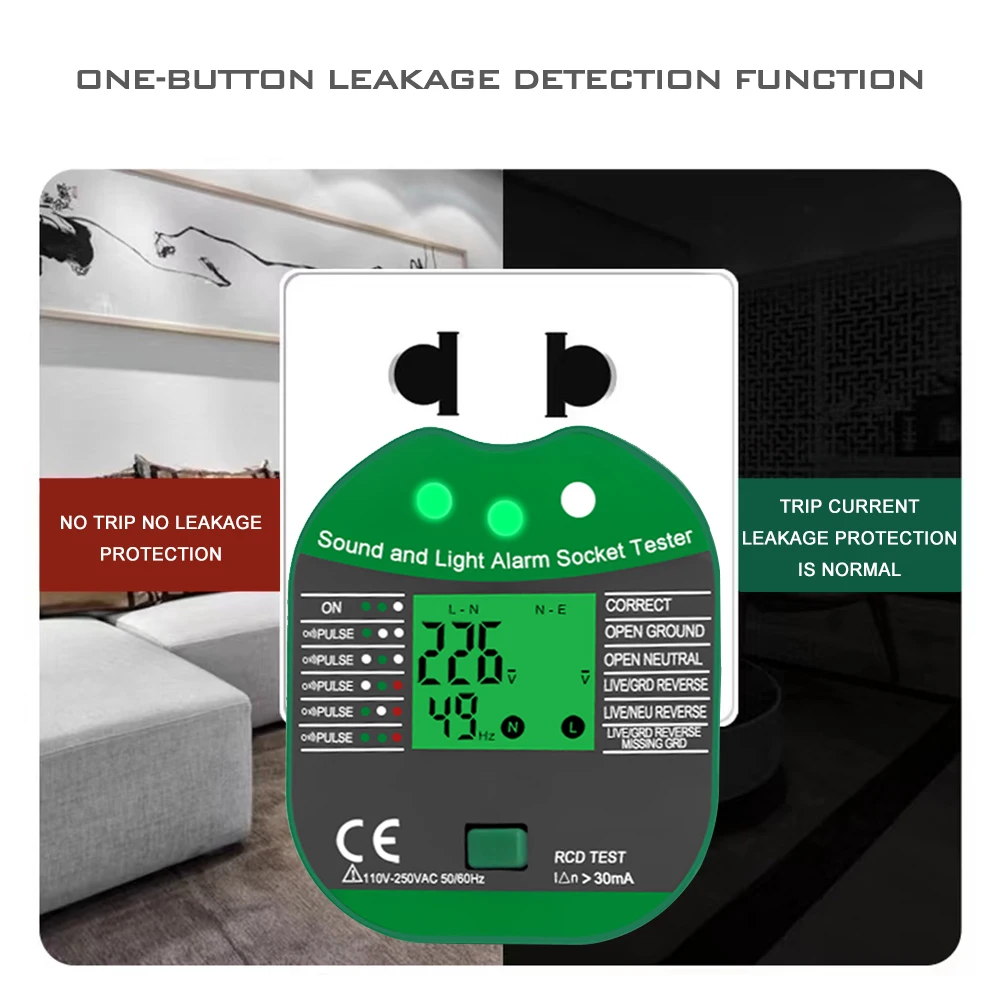
Plug the tester into the correctly wired three-hole power socket. and the RCD trigger current will be displayed on the display screen. Press the RCD key. At this time. the normal leakage switch will jump off. If it does not jump off. it means that the leakage switch has failed. Please find a professional electrician to repair it in time.
Be the first to review “LEFAVOR Socket Tester Pro Voltage Test RCD 30mA Socket Detector UK EU Plug Ground Zero Line Plug Polarity Phase Check”
Related products
New Products

New Products

Reviews
There are no reviews yet.